

❋
Bladder Neck & Vesicourethral Stenosis
What these are
Both terms describe scar tissue narrowing the outlet where urine leaves your bladder. Which term applies depends on what surgery you had.
Bladder neck stenosis (BNS) is scarring at the bladder neck itself, most often after a procedure for an enlarged prostate — TURP, laser surgery, or a similar operation.
Vesicourethral anastomotic stenosis (VUAS) is scarring at the join between the bladder and the urethra created when the prostate was removed for cancer. It's the same problem in a slightly different place.
You may also hear "bladder neck contracture" or "bladder neck stricture." They refer to the same process.
Why it happens
After prostate surgery or radiation, the tissue at the outlet has to heal. Sometimes it heals with too much scar, and the opening narrows. Contributing factors include the type of surgery, poor blood supply to the area, urine leaking during early healing, and radiation, which impairs healing for years afterward.
It is not a sign that your surgery was done badly, and it is not a sign that your cancer has come back — though we will confirm that.
Symptoms
The pattern is usually gradual and easy to dismiss:
A stream that weakens over weeks or months
Straining to start or maintain the stream
Feeling like your bladder doesn't empty
Going frequently, including at night
Recurrent urinary tract infections
Sometimes complete inability to urinate, which is an emergency
If you had a prostatectomy, there's a particular pattern worth knowing: leakage that was slowly improving suddenly gets worse, or your stream weakens at the same time. That combination often means a narrowing is developing, and it's worth calling rather than waiting for your next scheduled visit.
How we evaluate it
Uroflow and bladder scan — how fast you empty and how much is left behind
Cystoscopy — a small camera in the office. This is the definitive test, and it also lets us see the sphincter and assess how much of it is working.
Retrograde urethrogram and voiding cystourethrogram — X-ray studies that show the narrowing and how far it extends
Assessment of your continence — how many pads, and what kind
The thing that makes this different from other strictures
At the bladder neck, the scar sits directly next to your urinary sphincter — and after a radical prostatectomy, that external sphincter is the only continence mechanism you have left.
That creates a genuine tension. Treating the narrowing aggressively enough to guarantee it stays open risks damaging the sphincter and causing incontinence. Treating it too cautiously risks it closing back down.
Managing that trade-off deliberately, rather than stumbling into it, is the central skill in treating these. Any surgeon who tells you there's no risk to your continence here is not being straight with you.
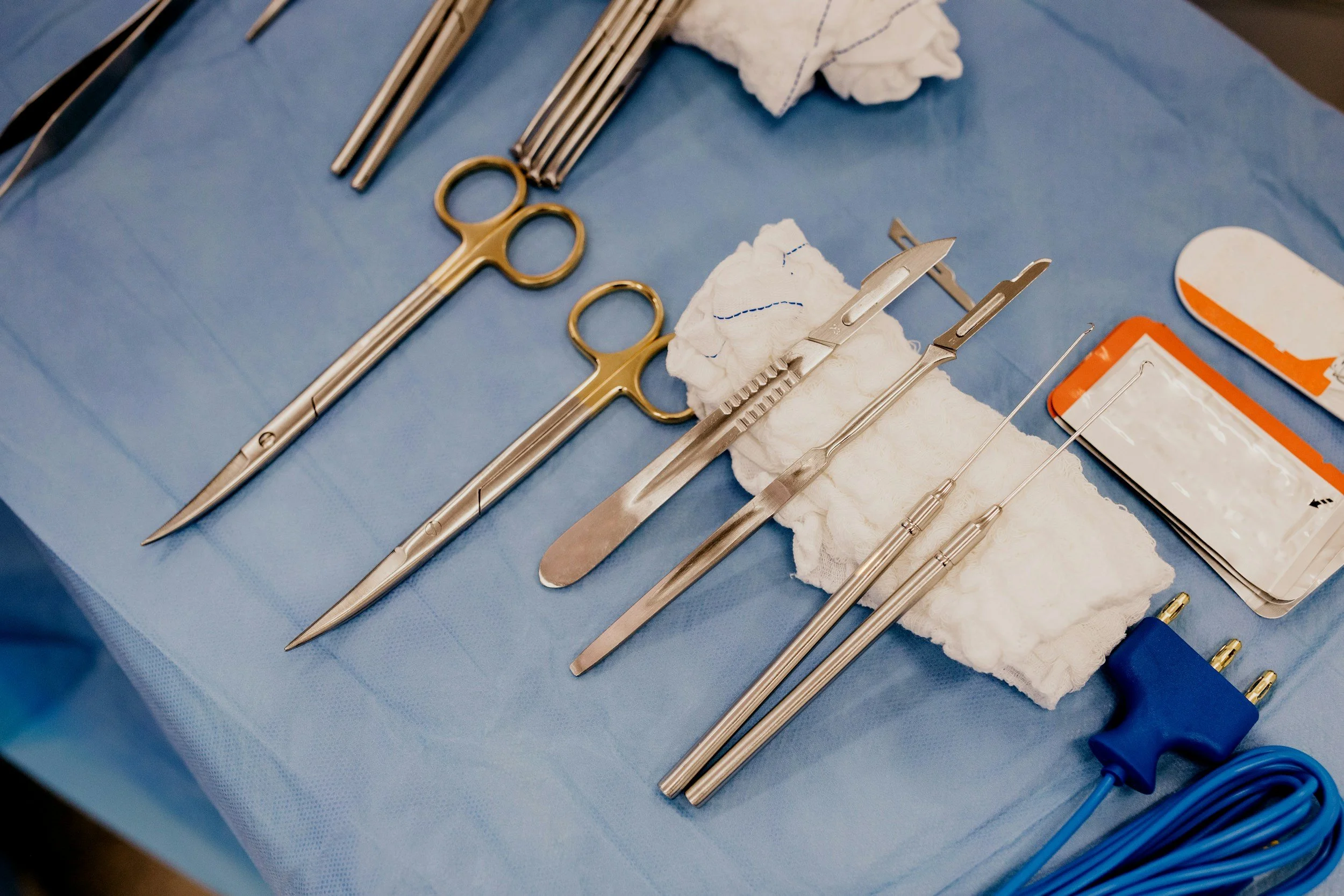
Your treatment options
Dilation
Stretching the narrowing open. Simple, quick, and often the first thing tried. Recurrence is common, but for a first, soft, early narrowing it's a reasonable place to start.
Transurethral incision
Rather than stretching the scar, it is precisely incised through a scope, using a cold knife or laser. The incisions are deliberately placed at positions that open the ring while staying away from the sphincter.
This is more effective than dilation. But recurrence rates after conventional endoscopic treatment of bladder neck and vesicourethral stenosis remain high — reported in the range of roughly 30 to 60 percent — and each repeat attempt tends to work less well than the last while adding cumulative risk to the sphincter.
That plateau is the problem this next option was developed to address.
Transurethral incision combined with drug-coated balloon (Optilume)
This is the approach we've focused on, and one that relatively few centers currently offer for this problem.
The rationale is straightforward. Incision opens the scar mechanically. What it doesn't do is stop the scar from re-forming, which is why recurrence is so common. The Optilume balloon is coated with paclitaxel, a medication that suppresses scar formation. Combining the two addresses both halves of the problem in one procedure: the incision opens the narrowing, and the drug is delivered into the tissue to discourage it from closing again.
What the evidence shows. Published experience is still limited but encouraging. In a multi-institutional real-world series, roughly three quarters of patients treated for posterior narrowings — bladder neck and vesicourethral stenosis — were free from repeat intervention at one year, which compares favorably with conventional endoscopic treatment. Smaller series have reported similar results, including stable continence.
An important disclosure. The Optilume drug-coated balloon is FDA-approved for strictures of the anterior urethra. Its use at the bladder neck or the vesicourethral anastomosis is off-label — meaning it is a legitimate, published, physician-directed use of an approved device, but it falls outside the specific indication the FDA reviewed. We will explain exactly what that means for you, including for your insurance coverage, before you decide.
Where it fits. It is best suited to recurrent narrowings that are short and not fully obliterated, in patients whose sphincter still functions. It is less suitable for a completely closed-off outlet, or where the outlet has already been treated repeatedly and the sphincter is gone.
Robotic reconstruction
When endoscopic treatment has failed repeatedly, or the narrowing is dense and long, the outlet can be rebuilt surgically rather than repeatedly reopened.
Through small incisions, the scarred segment is excised and the bladder is re-joined to the urethra with healthy, well-vascularized tissue. Depending on the anatomy, this may take the form of a Y-V plasty or T-plasty, in which a flap of healthy bladder is advanced into the narrowed area to widen it permanently rather than simply cutting the scar.
Robotic access matters here because the space is deep in the pelvis, often heavily scarred from previous surgery and radiation, and the work is millimeters from the sphincter. Magnification and precise instruments make a real difference.
Reconstruction is more durable than repeat endoscopic treatment. The trade-off is that operating this close to the sphincter carries a meaningful risk of incontinence, and for some patients that risk is accepted knowingly as part of a two-stage plan.
Planning for continence
For many men, the honest framing is this: first we get you emptying, then we get you dry.
If reconstruction leaves you with leakage, or you already had leakage, an artificial urinary sphincter can be placed once the outlet has proven stable — usually several months later. This staged approach is common and deliberate. It is far better than trying to do both at once and compromising either result.
For a small number of people whose outlet cannot be salvaged, urinary diversion is discussed. This is a last resort, but for someone who has been through many failed procedures, it can be the option that finally returns a normal life.
Recovery
Endoscopic treatment, with or without the balloon, is outpatient, with a catheter for a few days
Robotic reconstruction usually involves one or two nights and a catheter for around two to three weeks, with an X-ray before removal
Follow-up cystoscopy or flow testing is important — these narrowings can recur silently, and we'd rather find it early
Common questions
Does this mean my cancer is back? Almost always no. Scar tissue and recurrence look different, and we'll confirm it.
How many times can this be treated endoscopically? There's no fixed limit, but the returns diminish and the risk to your sphincter accumulates. If you've had two or three and it keeps returning, that's the moment to discuss a different strategy rather than a fourth repeat.
Will treating this make me leak? It can. The risk depends on the location, how much sphincter you have left, and which treatment is chosen. This is the central conversation we'll have, and it's why we assess your sphincter first.
I've already had several procedures elsewhere. Is there anything left? Usually yes. Recurrent bladder neck and vesicourethral stenosis is a specific area of focus for us, and patients often arrive believing they've run out of options when they haven't.
Is the balloon covered by insurance? Coverage for off-label use varies. Our office will look into it for your specific plan before scheduling.
Questions worth asking at your consultation
Exactly where is my narrowing, and how long is it?
How much sphincter function do I have left?
What is my risk of leaking after each of the options?
Why are you recommending this approach over another?
If this is off-label, what does that mean for me and for my coverage?
If this fails, what's next — and is there a limit to how many times we try?
To schedule a consultation and discuss which option is right for you, please visit our CONTACT page.